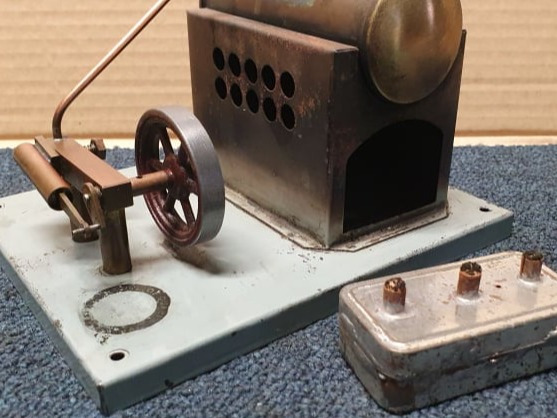
Beginners Guide
Operating a 2nd hand model steam engine for the first time.
Getting that model steam engine running
If you’ve purchased a modern brand new steam engine then getting it to run should be as simple as following the instructions that came with your engine.
If you’ve purchased a 2nd hand engine, and if you’re very lucky it will run first time, however more than likely it may not, especially if it’s been sitting in a shed for many years.
Luckily these engines are technically very simple (unlike modern technology), so it’s usually a relatively simple process to get them working again.
However please keep in mind that you’ll be dealing with both flammable fuel and scalding hot water, and will need to proceed with care and caution to avoid injury to yourself and any by standers. It always good to think to yourself "It's HOT" before you touch anything!
It’s also a good idea to keep a wet towel close by in case you find yourself needing to put out any small fires.
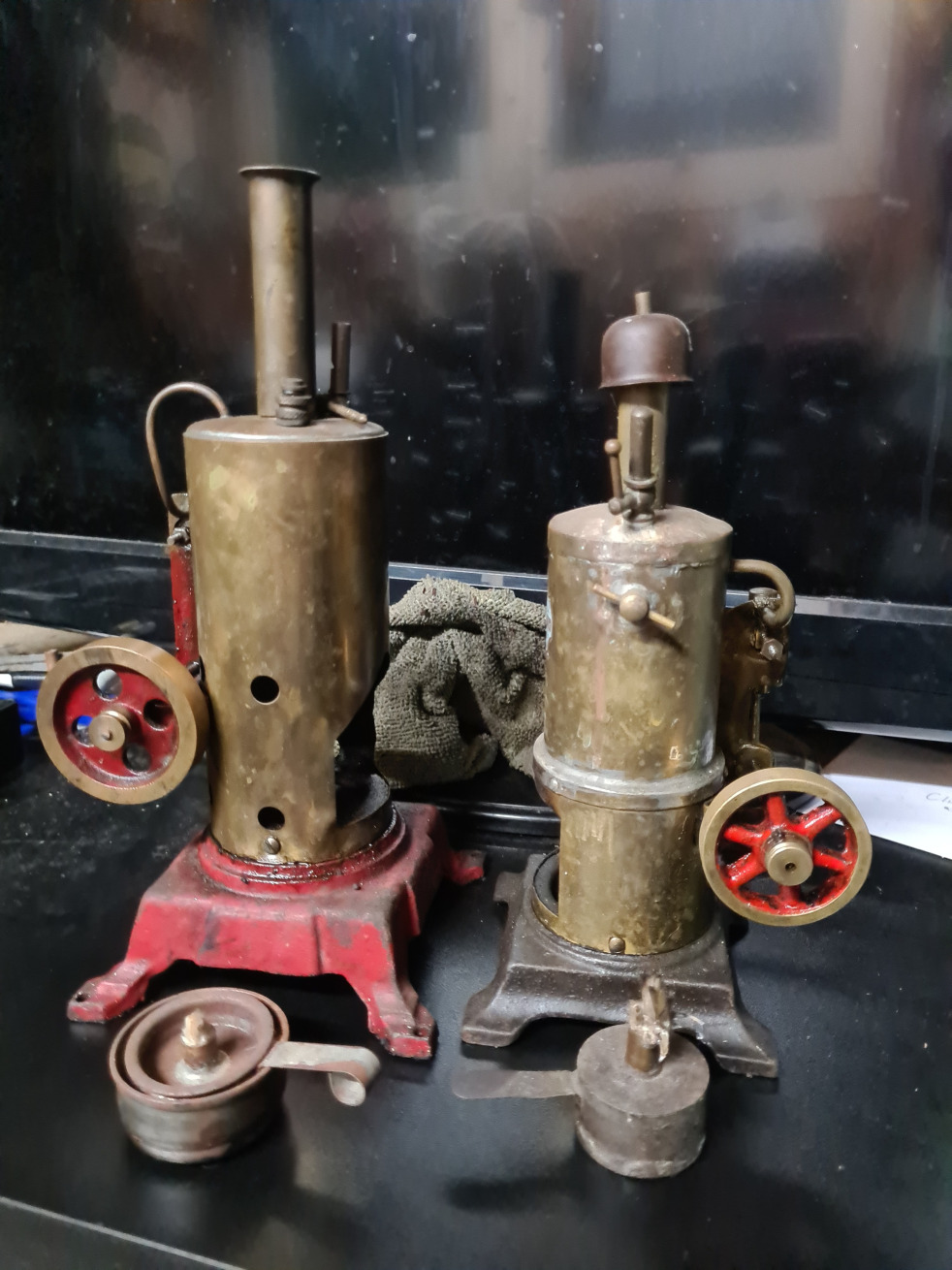
The author of this beginners guide to toy steam engines takes no responsibility for any injury resulting from the reader following these instructions.
Lets Start...
Visually Inspect the Engine
The first thing to do is to inspect the condition of the boiler. If you see anything that looks like a crack or corrosion then DO NOT steam the engine. There’s a real danger that it could suddenly release high pressure hot water or steam resulting in a serious burn injury. In this circumstance it is strongly recommended to have the boiler pressure tested.
Next check the steam pipes to make sure none of them are broken, split or loose.
Check that all the engine moving parts slide or spin freely.
If the engine feels tight it could be due to old oil that has gone hard and gummed up the piston. Remove the piston taking note of which way the push rod is facing. Clean the piston and inside of the cylinder and apply fresh steam oil before assembly. If possible re-insert the piston facing in the same way around that it came out.
Apply a small drop of lubricating oil to all other external moving parts.
Ensure the safety valve is functional.
Inspect the seals/gaskets on the safety valve and whistle if fitted. If they are missing or damaged you can replace them with a similar seal, or a rubber o-ring.
More details about inspecting and servicing your safety Valve can be found in our Safety Valve guide.
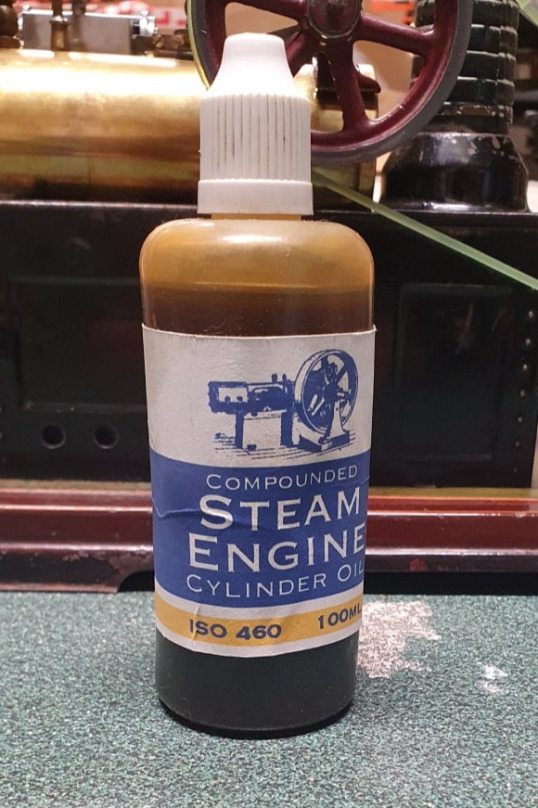
Steam will very quickly remove regular motor oil from the inside of the cylinder/piston resulting in a high amount of friction. It's best to purchase a small bottle of Steam Oil of ISO 460 grade. This will keep the engine lubricated and running for longer.
Use regular motor oil or sewing machine oil to lubricate external moving parts on the engine.
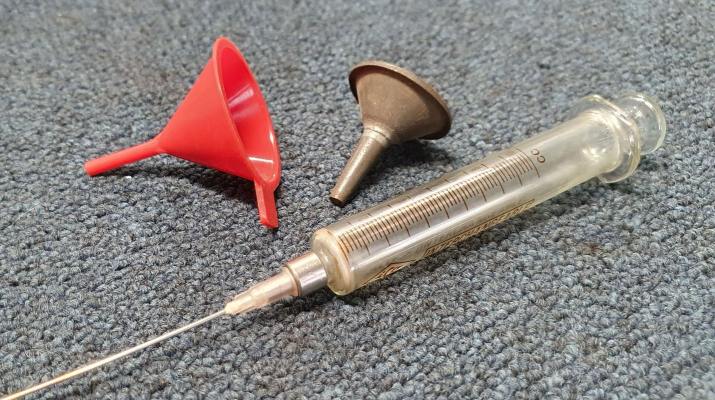
Some very useful items. The small funnels help with filling your boiler with water.
A hypodermic syringe with a long blunt needle*, is ideal for filling burners with just the right amount of methylated Spirits (ethanol fuel). It can also be used to remove any last remaining water from a boiler after a steam session. This is important in steel boilers to prevent rust.
*some countries regulate the supply of hypodermic needles.
The Heat Source...
Burners
Most of the older Australian & New Zealand made steam toys use methylated spirits burners. These are basically a small metal can with one or more wicks at the top and the whole burner is placed in the fire box under the boiler.
These burners work fine if used carefully, but can burst into flame if over filled.
Liquid fuel burners should only ever be filled half way, absolutely no more! The burners are subject to high heat when in the fire box, causing the methylated spirits to expand, overflow, catch fire and engulfed your precious engine in a fire ball! In this dangerous situation, immediately smother the engine with the wet towel … do not attempt to remove the burner as this may spread the fire.
HINT: dilute the ethanol/methylated spirits with 5-10% water to tame the flame. This also prevents the flame from sooting or emerging from the firebox and burning the outside of the boiler.
Later engines like the ones from Steamco came with burner trays for use with Esbit or Hexamine solid fuel tablets. (Sold in hobby shops and also camping stores for use with portable food cookers). While these tablets work well at making heat, they do have a major disadvantage of giving off noxious fumes and being very smelly when they burn! Fuel tablets should only be used in a well ventilated area.
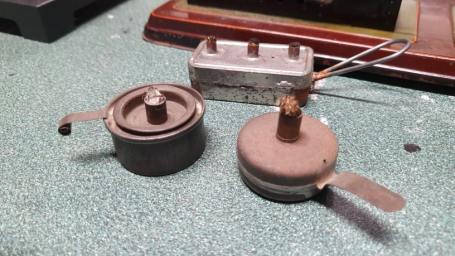
Vintage Australian engines typically used metho burners that were placed in the fire box. These work well, but be careful to never fill them more than half full to avoid them from overflowing.
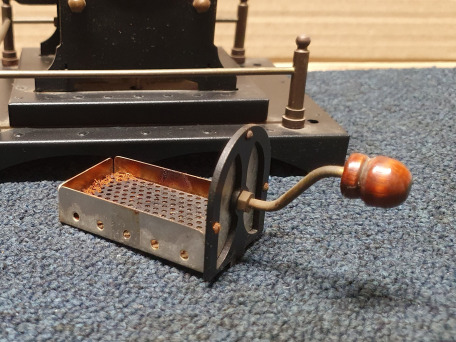
Solid Fuel burners used in later engines are basically just a simple tray where you place a fuel tablet and let it burn.
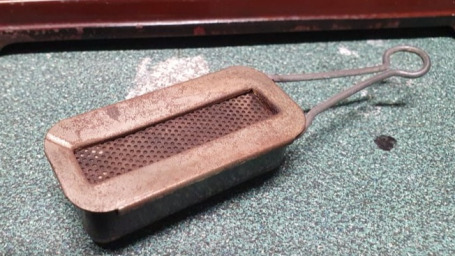
If you manage to find an old Mamod metho burner, these work really well and can be filled to the top of the mesh with metho, and don't spill or overflow.
Hot Water...
Boiler Water
There is much debate on global forums about what water to use in toy steam engine boilers. Distilled, De-ioinsed, Tap, Rainwater… etc The majority of forum members recommend filtered, neutral pH, rainwater. Tap water is acceptable but just like any coffee machine, the boiler will occasionally need descaling with descaling solution or diluted vinegar.
A handy tip is to use pre-heated water to fill your boiler, an electric jug works really well for this. That way you’re not wasting metho or Esbit to heat up a cold boiler.
Use a small funnel to help with filling the boiler.
Do not fill the boiler to the top. There must be a space for steam to form. A rough guide is to fill the boiler to two thirds full.
Getting exciting now...
Heating Up
As the boiler starts to warm up and pressure builds, keep an eye out for water or steam leaks at the boiler seams, steam pipes, safety valve or whistle. If leaks occur, remove the flame and rectify the leaks. Seek help from forum members if you cannot stop the leaks.
Note: There will be some water condensation leaks at the cylinder/piston while things are warming up.
Provide a helping hand...
While it's heating up
As the boiler is warming up you should turn the flywheel every so often, as the steam pipe and engine parts are cold, the steam will condense to form water in them. Turning the flywheel over allows the water to be expelled and also allows the steam to warm up the cold engine parts.
Once the steam pressure builds up and the engine parts have warmed, you’ll start to feel the engine trying to run as you turn the flywheel. Keep turning the flywheel every so often and eventually the engine will cough and splutter and start running by itself.
If the engine hasn’t been run for a long time you may also find that the engine loosens up and improves after you’ve had it running 2 or 3 times.
That was fun...
Want to run it again?
The engine will slow down and stop when the fuel in the burner runs out. It's a design feature to protect the boiler as you don't want to run out of water before you run out of fuel. Heating a dry boiler can cause major damage like melting the soldered boiler seams.
If you want to run the engine again, make sure you top up both the boiler and burner.
Don't just refill the burner!
Before rewatering, release any pressure from the boiler by operating the whistle if one is fitted, or carefully partially loosen the safety valve (wear leather gloves or use a rag to prevent burns. Avoid using pliers as they can damage the metal). Remember all parts of the engine will be very HOT!
That didn't work...
Couldn't get it to run
If you’ve done everything right and you just can’t get your engine to run, don’t fret. We’ve all been in this situation at some time. The best way to get help is to join one of the online discussion forums where you’ll be able to get further help from other model steam enthusiasts. If you can show some photos or even a short video of what's happening it will help others to point you to a solution.
Before you put it away...
When you've finished with the engine
Release any pressure from the boiler by operating the whistle if one is fitted, or slowly partially loosen the safety valve (use leather gloves a rag to prevent burns).
When the boiler has cooled off, empty all the remaining water. Don’t leave water in the boiler when not using the engine as it can cause corrosion even in brass & copper boilers.
Use a rag to wipe off any excess water and oil otherwise you'll discover how well dust loves to stick to an oily steam engine.
AU-NZ-SteamToys - Online since April 2024
